Exemplary destinations are not defined only by scenery, luxury hotels, or iconic attractions. They are defined by the standards a place sets for protecting life and wellbeing and by how consistently those standards are upheld as tourism grows.
A practical and highly visible starting point for destination excellence is becoming a cruelty-free destination, where stray animals are treated humanely and supported through permanent programs for assistance, veterinary care, vaccination, adoption, and sterilization. In parallel, exemplary destinations must also protect what makes them unique: their native wildlife and ecosystems, ensuring tourism strengthens conservation rather than accelerating biodiversity loss.
This is not a “nice-to-have” initiative. Unmanaged stray populations and poorly controlled tourism activity both create tangible risks: negative visitor experiences, public health challenges, ecosystem degradation, wildlife disturbance, and reputational damage. By contrast, destinations that implement humane animal welfare and robust wildlife conservation demonstrate the maturity of governance that serious travelers, partners, and investors increasingly expect through clear policies, strong alliances, transparent indicators, and continuous improvement.
Why cruelty-free destinations matter
A cruelty-free approach sits at the intersection of ethics, risk management, and competitiveness, here are four reasons why it matters to the tourism industry:
- Ethical leadership and community trust. Tourism depends on local acceptance. When residents perceive that tourism growth worsens problems like abandonment, suffering, conflict in public spaces, or ineffective response, support for tourism declines. Humane management reinforces dignity, shared responsibility, and trust between communities and the tourism economy.
- Visitor safety and experience. Incidents involving bites, aggressive behavior, or distressed animals can quickly damage a destination’s reputation. Just as important, visitors often react strongly to visible suffering. Humane prevention is more effective and less costly than crisis response after an incident has gone public.
- Public health and hygiene. Structured sterilization and vaccination reduce uncontrolled population growth and limit health risks. They also reduce pressure on local services and improve hygiene in tourism zones and neighborhoods.
- Reputation and positioning. Cruelty-free destinations signal modern, responsible governance. They stand out as places that manage growth with integrity, reducing vulnerability to reputational shocks and strengthening long-term brand value.
Wildlife conservation: the other non-negotiable for exemplary destinations
If stray animal welfare is the most visible test of a destination’s ethics, wildlife conservation is the most strategic test of its future. Destinations thrive because ecosystems are healthy: beaches, reefs, mangroves, forests, wetlands, and mountain habitats are not “background scenery” they are the asset base of tourism.
Exemplary destinations protect wildlife by combining science-based conservation practices with responsible visitor management, something that should be a must for anyone planning a career in Tourism:
Habitat protection and restoration. Tourism development must avoid fragmentation and degradation of key habitats. Where impacts already exist, destinations should invest in restoration and nature-based solutions.
Human–wildlife coexistence. Clear rules reduce conflict: do not feed wildlife, keep safe distances, respect nesting and breeding areas, and enforce responsible behavior in sensitive zones.
Control of invasive species and predation pressure. Unmanaged dogs and cats can harm native fauna, especially birds, reptiles, and small mammals. Effective stray management supports biodiversity by reducing predation and disturbance.
Light, noise, and pollution management. Artificial light and noise disrupt wildlife behavior and reproduction. Exemplary destinations implement lighting standards, quiet hours in sensitive zones, and strong waste and wastewater management.
Zero tolerance for wildlife exploitation. Destinations must screen and regulate experiences and vendors to avoid unethical wildlife interactions, illegal wildlife trade risks, and captive wildlife entertainment that undermines conservation.
Monitoring, enforcement, and partnerships. Conservation works when rules are enforced and outcomes are measured. Destinations should partner with protected-area authorities, researchers, and NGOs to track key species and strengthen compliance.
Tourism’s responsibility: from “do no harm” to “build capability”
Tourism is not a passive presence. Hotels, tour operators, attractions, and destination management organizations influence local priorities through employment, procurement, training, communications, and stakeholder coordination. With that influence comes responsibility to move beyond occasional donations and implement structured, scalable systems, both for cruelty-free practices and wildlife conservation.
A credible strategy requires five pillars:
- Formal destination partnerships. Establish long-term collaborations with shelters, veterinarians, NGOs, conservation authorities, and municipal programs. Ensure capacity for treatment, vaccination, sterilization, adoption, habitat management, and conservation education.
- Clear procedures for incidents and sensitive areas. Define what to do with injured animals, wildlife sightings near operations, strays in guest areas, or disturbance in protected zones. Standard procedures reduce risk and prevent improvised actions.
- Scalable Financing mechanisms. Enable funding through voluntary guest contributions, sponsorships, corporate matching, and partner campaigns, combined with transparent reporting.
- Training and visitor communication. Staff must know what to do and what not to do. Visitors need simple guidance on reporting injured animals, avoiding informal feeding, respecting distances, and following protected-area rules.
- Supplier and experience screening. Screen excursions and vendors, remove unethical animal interactions, and replace them with conservation-aligned alternatives. Provide clear information on the consequences of unethical animal interactions.
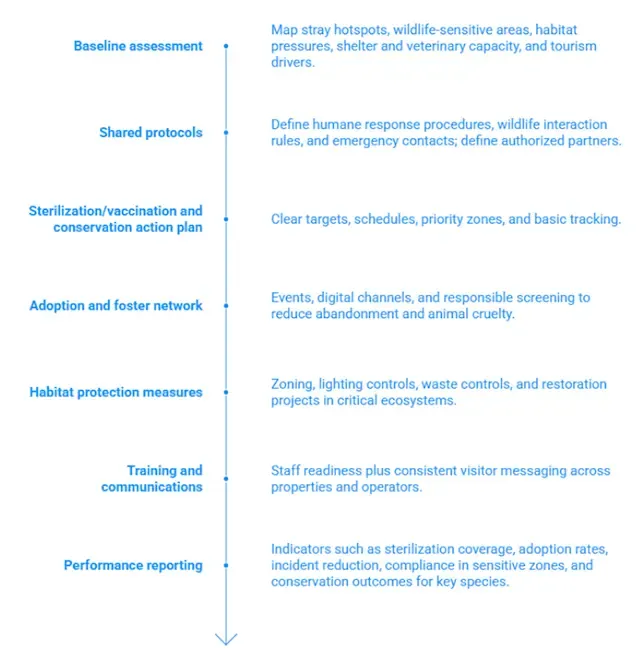
A practical roadmap
A destination earns credibility through discipline, not slogans, creating a roadmap for a Cruelty Free destination should include:
Exemplary destinations are built through deliberate choices. Tourism can either amplify unmanaged challenges or become the engine that upgrades destination ethics, governance, and long-term competitiveness. Becoming cruelty-free is one of the clearest ways to prove leadership; protecting wildlife and habitats is the surest way to protect the destination’s future.
If the tourism industry wants credibility as a sustainability leader, it must start where values and daily operations meet. How a destination treats its stray animals and how it safeguards the wild species and ecosystems that define its identity.